Environmental
Clean coast, living reef
Offshore capture ends beach accumulation and protects reef and seagrass from smothering — the foundation of the tourism economy.
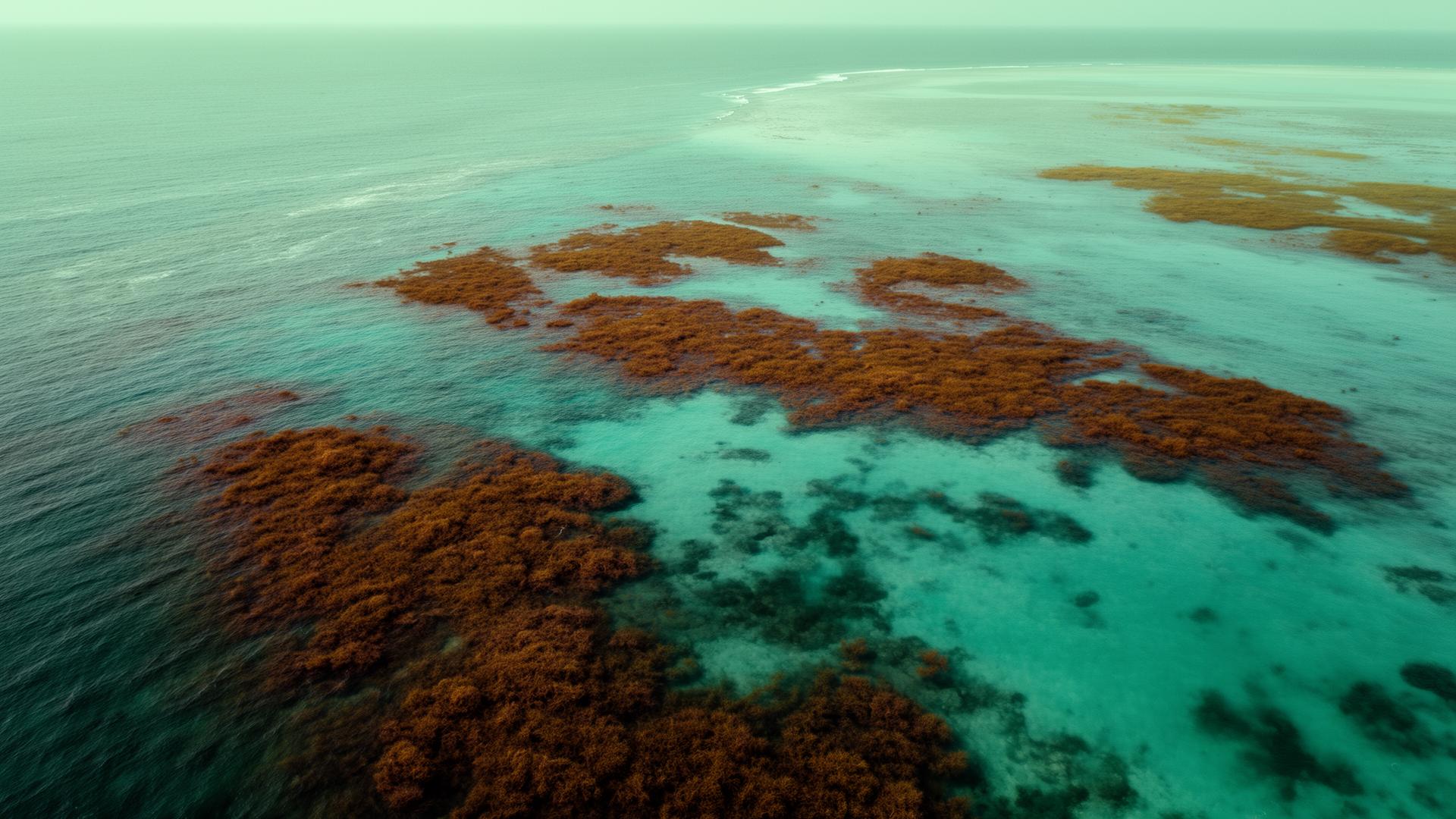
A B2G model financed by private capital for offshore interception, energy valorization and regional leadership — turning a coastal pressure into firm electricity, a new export industry, and Caribbean leadership.
Convert the recurring arrival of sargassum on Belize's coast — today a fiscal and operational burden — into a sovereign source of firm electricity, a new blue-economy export industry, and a position of regional leadership.
Offshore capture ends beach accumulation and protects reef and seagrass from smothering — the foundation of the tourism economy.
Anaerobic digestion delivers base-load, dispatchable power that displaces a meaningful share of imported electricity.
Surplus feedstock priced and traced through the MVS opens access to global macroalgae markets and formal coastal jobs.
Belize today carries a structural dependency on imported power and a fiscal burden from beach-side sargassum response. A single platform answers both.
Hundreds of thousands of tons captured offshore feed a single, accountable platform — TSWL operates every link, guaranteeing end-to-end traceability.
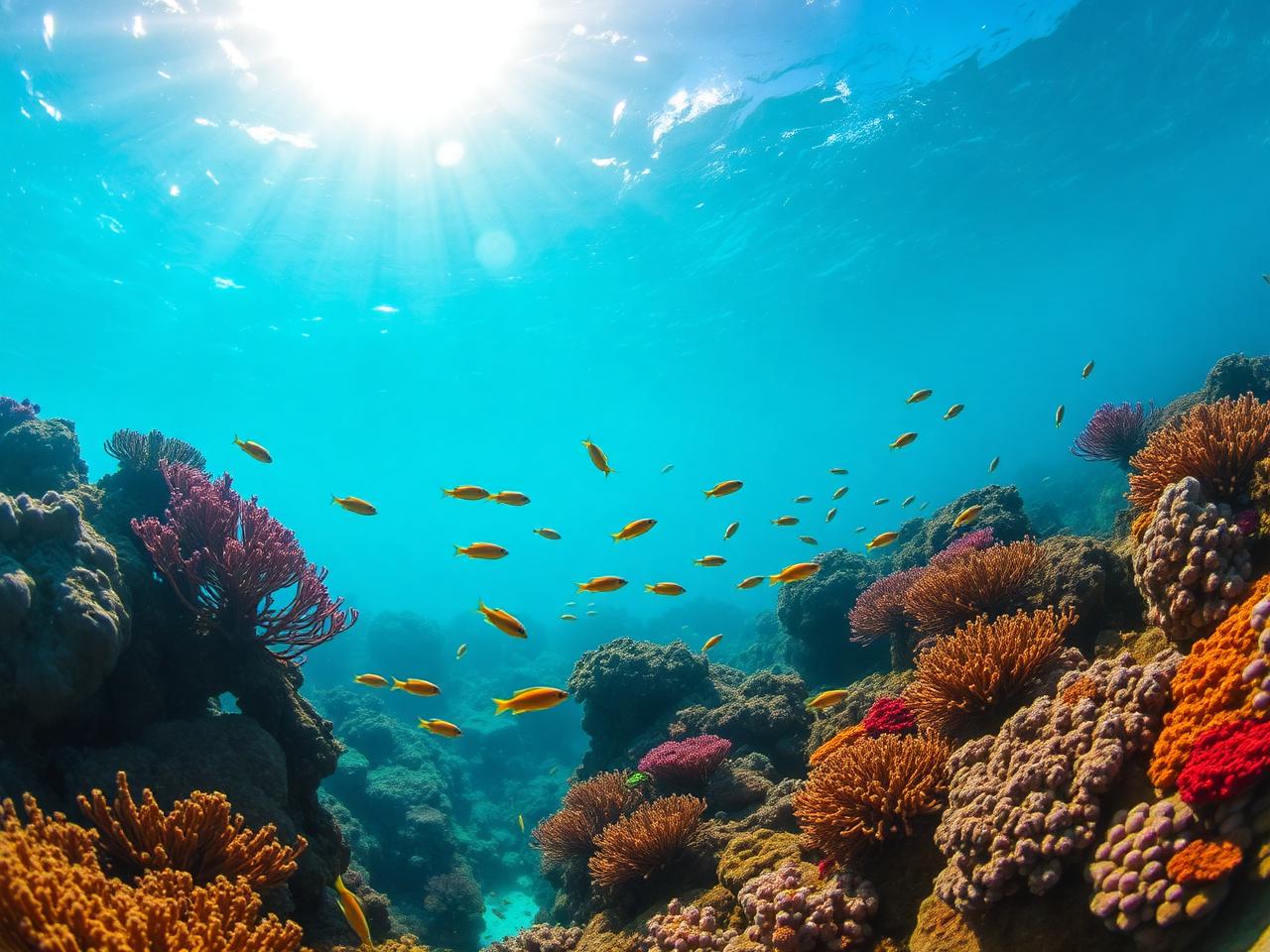
Zero beach accumulation. Lower municipal fiscal load. Preservation of Belize's tourism product and the Mesoamerican Barrier Reef.
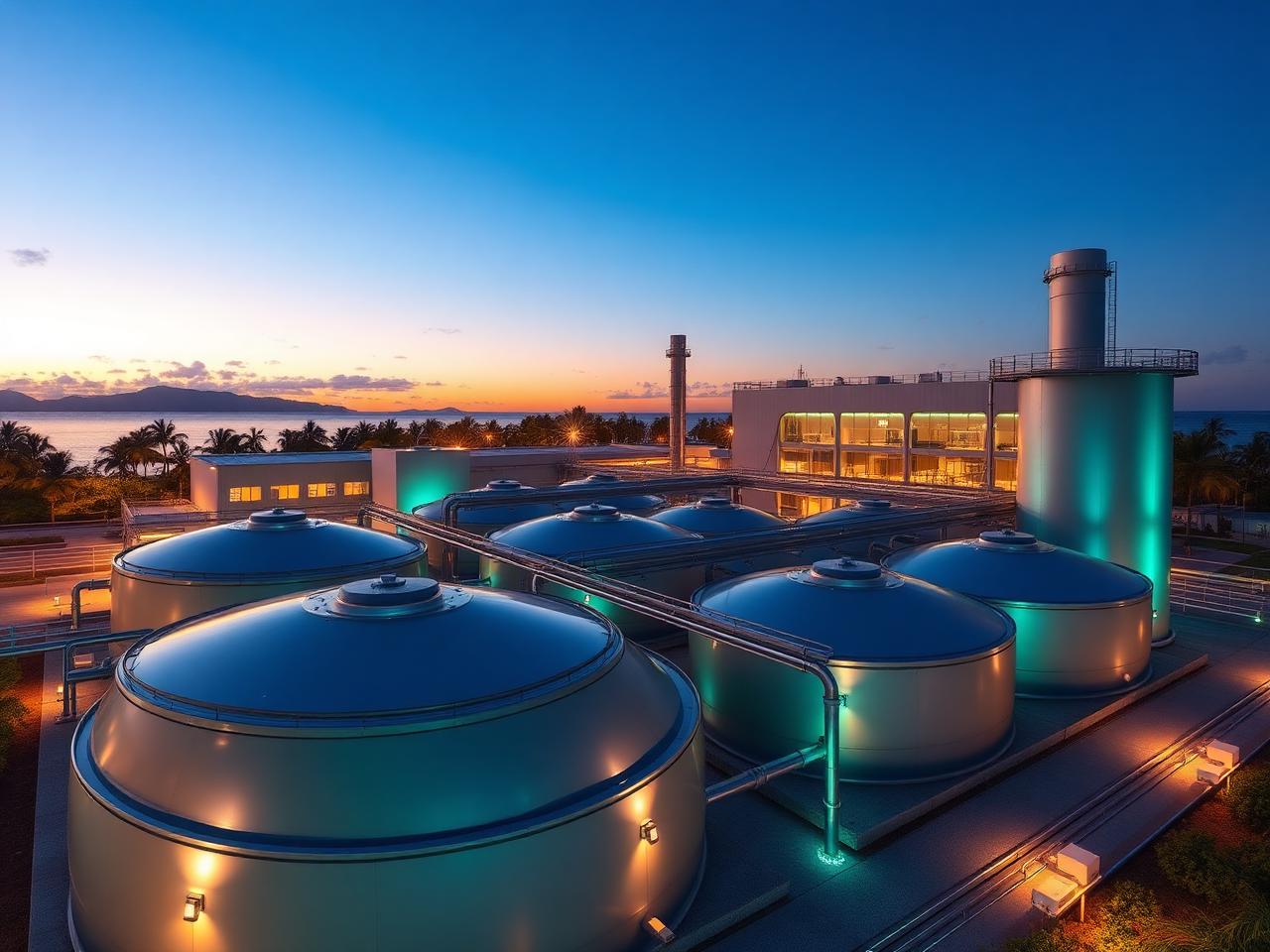
Conversion to biogas and dispatchable electricity (24/7). Structural complement to the 80 MW + 15 MW solar programme.
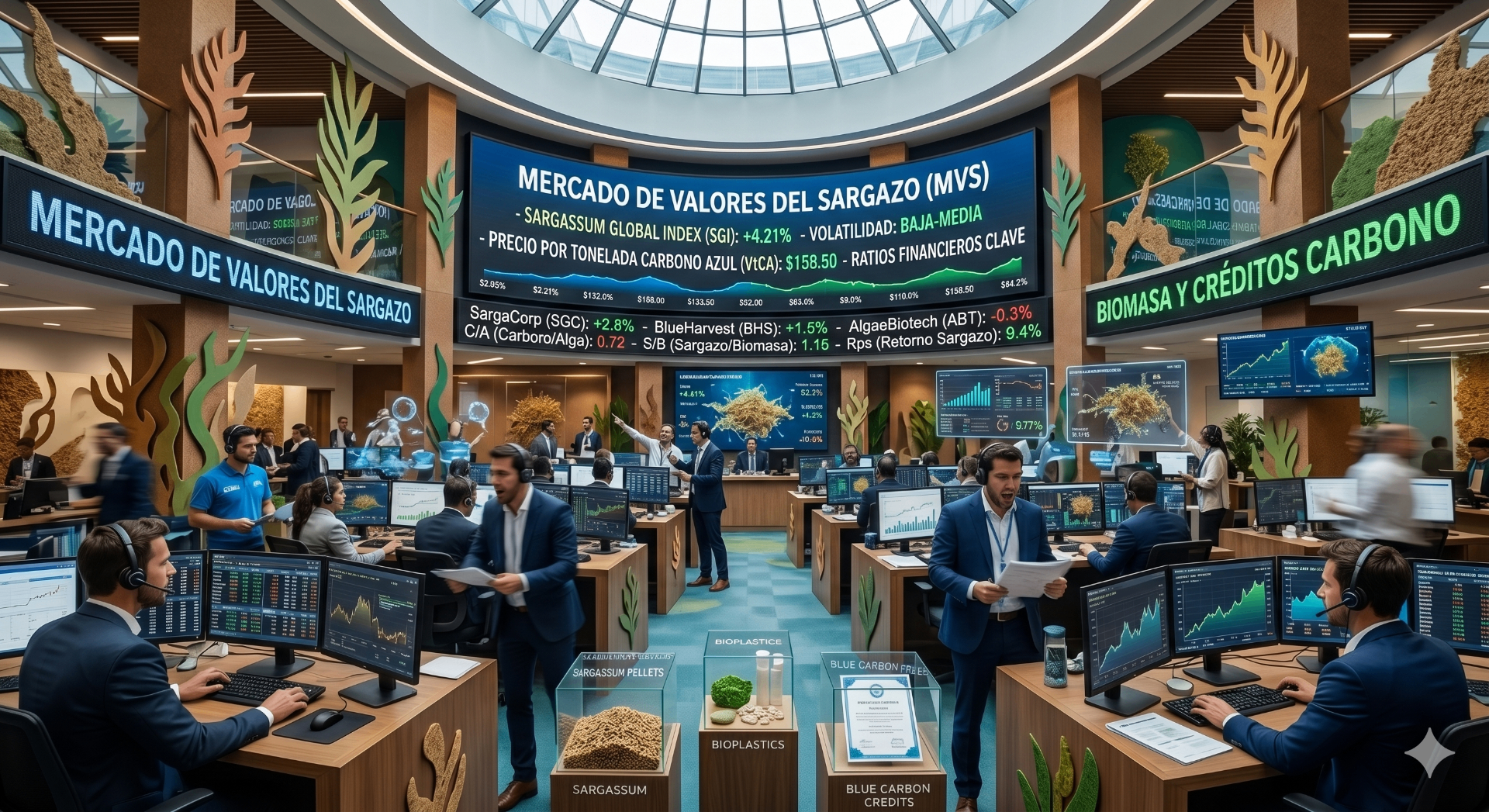
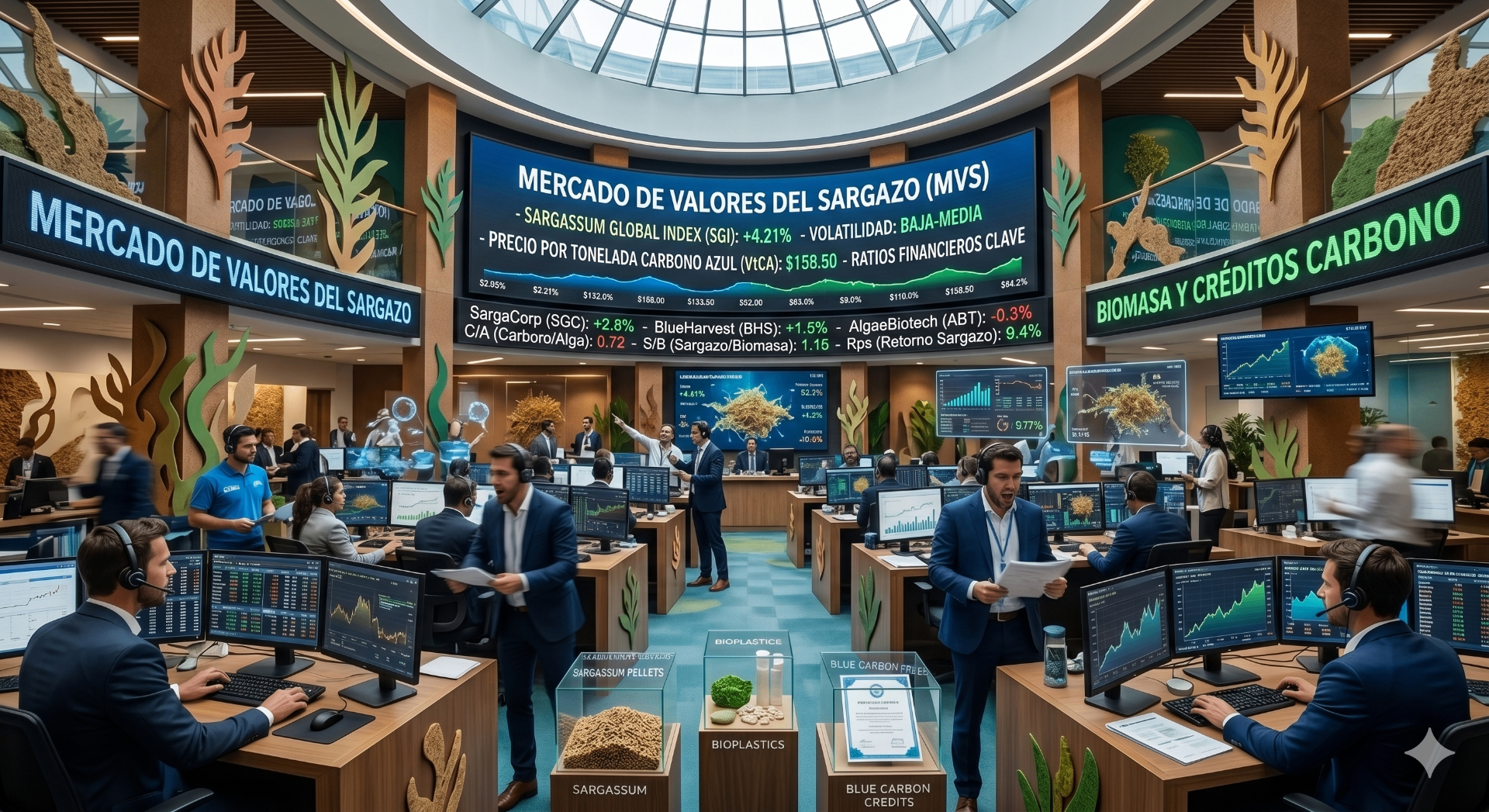
Access to the global macroalgae market. MVS reference prices: USD 500–750 per dry ton. Foreign-exchange earnings and formal jobs.
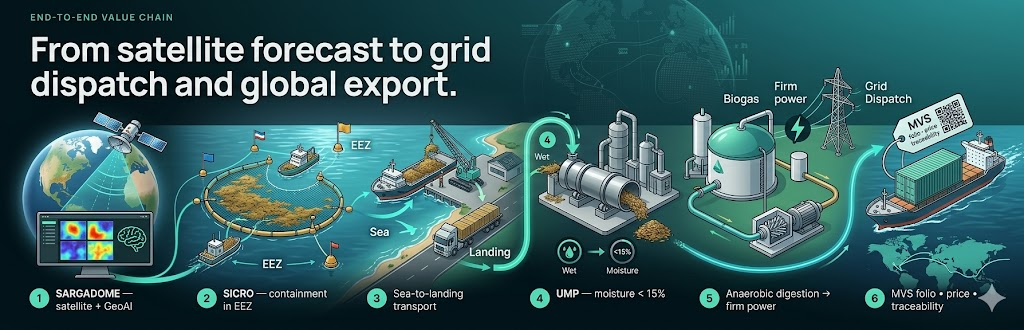
Digestion → biogas / biomethane → firm electricity dispatched to Belize Electricity Limited.
Surplus pretreated feedstock placed on global macroalgae markets via MVS.
The first plant is dimensioned for the San Pedro / Ambergris Caye island grid and operates as an Independent Power Producer under a long-term PPA with Belize Electricity Limited.
Cleaner, traceable feedstock commands the upper band of market pricing. Each ton ships with an MVS folio, a reference price and end-to-end traceability.
Predominance of Sargassum natans VIII and offshore capture yield low-sand, low-chloride feedstock — bankable for industrial buyers.
Folio, reference price and end-to-end traceability give Belizean tonnage market access and forward-contract bankability.
Export absorbs seasonal volume peaks the plant cannot consume — the two vectors stabilize each other.
Acting now positions Belize as the first nation in the region to resolve the matter intelligently — and to lead any regional initiative that subsequently emerges.
Belize intercepts the biomass before it disperses across the western Caribbean — the largest accessible volume in the region.
Full CARICOM and SICA membership opens the natural door to Jamaica, Barbados, Trinidad & Tobago, the Bahamas, Antigua & Barbuda.
Consolidated cabinet and legislative capacity enable a framework by executive decree faster than any larger jurisdiction could.
Belize co-builds this industry on equal footing — the convening leader of its CARICOM tranche, not a junior partner.
Offshore collection in northern Ambergris Caye. Pretreatment and first MVS-traced export. 500–1,000 tons of dry biomass. No plant built yet.
Construction and operation of the bioenergy plant in San Pedro. PPA signed and IPP startup. Stable volume 8,000–15,000 dry tons / year.
Second collection node (southern Belize). Commercial deployment across Caribbean nations and selective domestic verticals (biochar, bioagro-inputs).
Capital is committed by power owner-operator partners with ~4,000 MW of fully owned, self-financed generation and >20 GW designed and built as EPC contractors.
Long-term offtake — PPA, tipping fees, by-product sales — anchors cash flow before infrastructure is built.
MVS guarantees the feedstock through reference price, traceability and forward contracts.
Assets held in dedicated SPVs under the Build-Own-Operate / IPP model, within the DPA regime.
Fiscal incentives and concessional multilateral finance act as return enhancers, never as a rescue.
Our partners never finance construction before the plant authorization and the harvesting right are in hand. Capital is released in gates, each tied to a specific permit, licence or cooperation instrument.
Offshore EEZ harvesting authorization · Export and free-zone clearance · MVS folio active
Resource classification · EIA approval · DPA designation · IPP licence · PPA terms · Industrial land secured
Phase 1 operating · Second-node permits · CARICOM / SICA regional cooperation instruments
| Scenario | Scope | Timeline | CAPEX | Risk |
|---|---|---|---|---|
| Conservative | Manifest + Ambergris pilot (500–1,000 t) | 18 months | USD 1.5–2.5M | Low — recommended start |
| Base (recommended) | Pilot + DPA regime + EIA + full framework + bioenergy plant | 30 months | USD 12–22M + plant FEL-1 | Medium — full Phase 1 target |
| Optimistic | Two national nodes + domestic vertical + regional scale | 36–48 months | Staged by SPV | Medium-high — defer until Base operative |
The integrated TSWL platform (SARGADOME · SICRO · MVS) guarantees a single point of technical and financial responsibility.
80–150 formal coastal jobs in Phase 1. Strategic co-management with local fishing cooperatives along the EEZ.
Formal alliance with the University of Belize (Marine Studies Institute) for oceanographic monitoring, biomass characterization and specialized training.
Nine self-contained questionnaires submitted with the proposal address the competent authorities — Ministry of Blue Economy & Marine Conservation, Fisheries Department, Department of Environment, CZMAI, Belize Port Authority, Customs & Excise, Corozal Free Zone Authority, BELTRAIDE, Public Utilities Commission, Belize Electricity Limited, Central Bank of Belize and others. They define precisely the certainty our partners require before committing capital.
Signed between the Government of Belize and TSWL. Activation of contacts with the OPM, BELTRAIDE and ministries.
Regional announcement of Belize's leadership at the principal CTO forum before Caribbean tourism ministers.
Positioning under the circular-economy and climate-finance agenda as a flagship of Caribbean blue energy.
Once the institutional certainty is established, the financing follows. We submit this proposal as the foundation for a Manifest of Intention between TSWL and the Government of Belize — and as the entry point to a sovereign blue-energy industry governed entirely within Belize.